When might it be needed?
Deep decay, a crack or injury can allow infection to reach the pulp inside a tooth. Pain or an abscess may lead a dentist to investigate. Symptoms alone cannot show whether a root canal is the right treatment.
What happens during treatment?
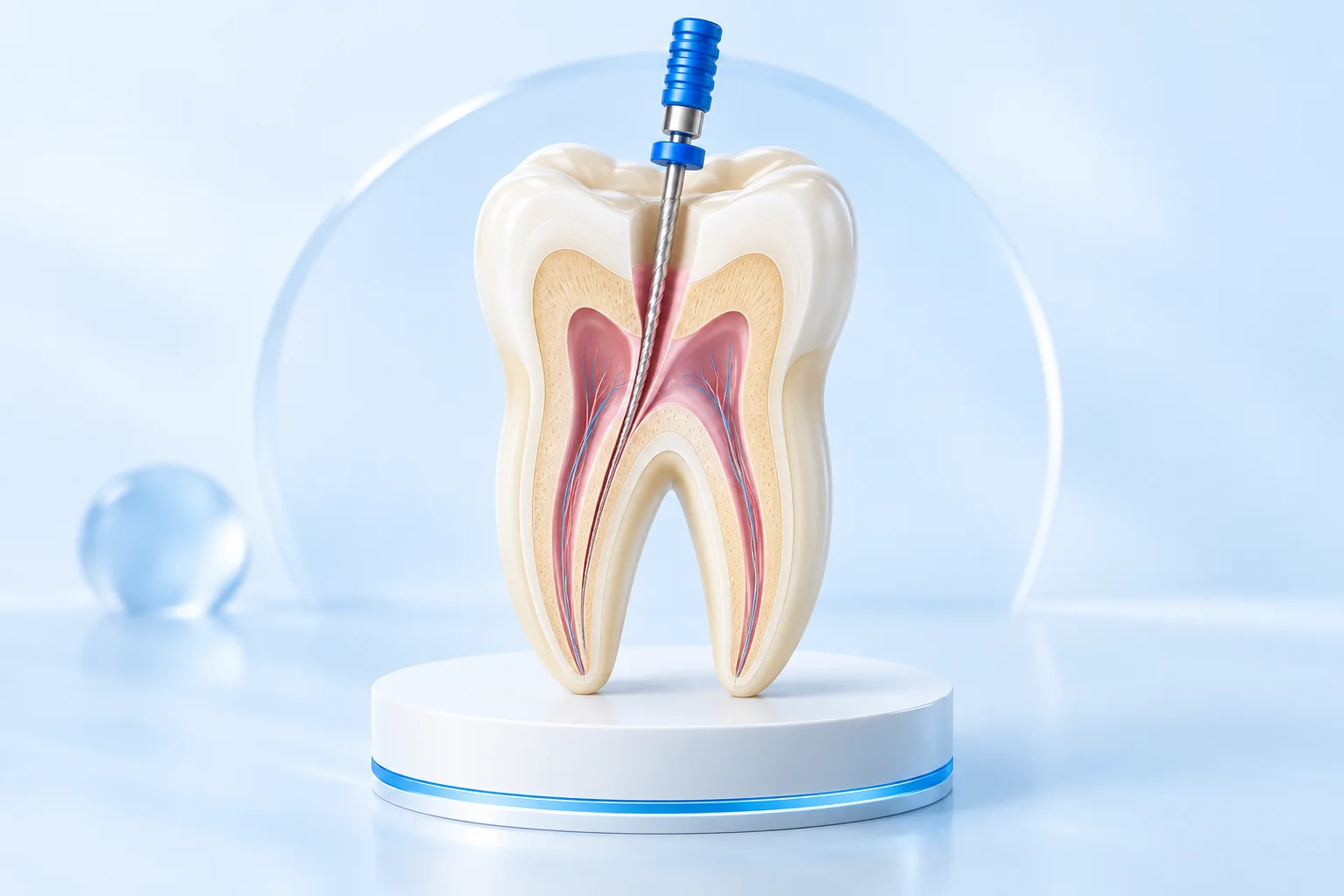
The dentist usually numbs the tooth, removes infected pulp, cleans and shapes the canals, then fills and seals them. Treatment may involve several visits and a temporary filling. A crown may be needed afterwards to protect the remaining tooth.
Recovery and follow-up
Some soreness can occur after treatment. Follow the treating dentist’s aftercare advice and attend follow-up appointments. Ask when the final restoration will be placed and how to protect the tooth until then.
Questions to ask before deciding
Can this tooth be predictably restored? Does the estimate include the final filling or crown? How many appointments are planned? What would extraction and replacement involve instead?
Common questions
Does every painful tooth need a root canal?
No. An examination is needed to identify the cause and appropriate treatment.
Can this treatment be completed online?
No. Online consultation can help discuss your concern, but treatment requires in-person dental care.
How online consultation can help
Use our consultation form to describe your concern, share relevant photographs and upload an optional report. After payment verification, Dr. Hiren Tandel reviews your request and contacts you about next steps. In-person examination may be needed before diagnosis or treatment planning.
This page provides general education, not a diagnosis or personalised treatment plan. For difficulty breathing or swallowing, seek urgent medical care instead of waiting for an online reply.
Further reading
Published by Arpan Virtual Dental Care · Updated 19 September 2026. For advice about your own teeth, discuss your symptoms and treatment options with a dentist.