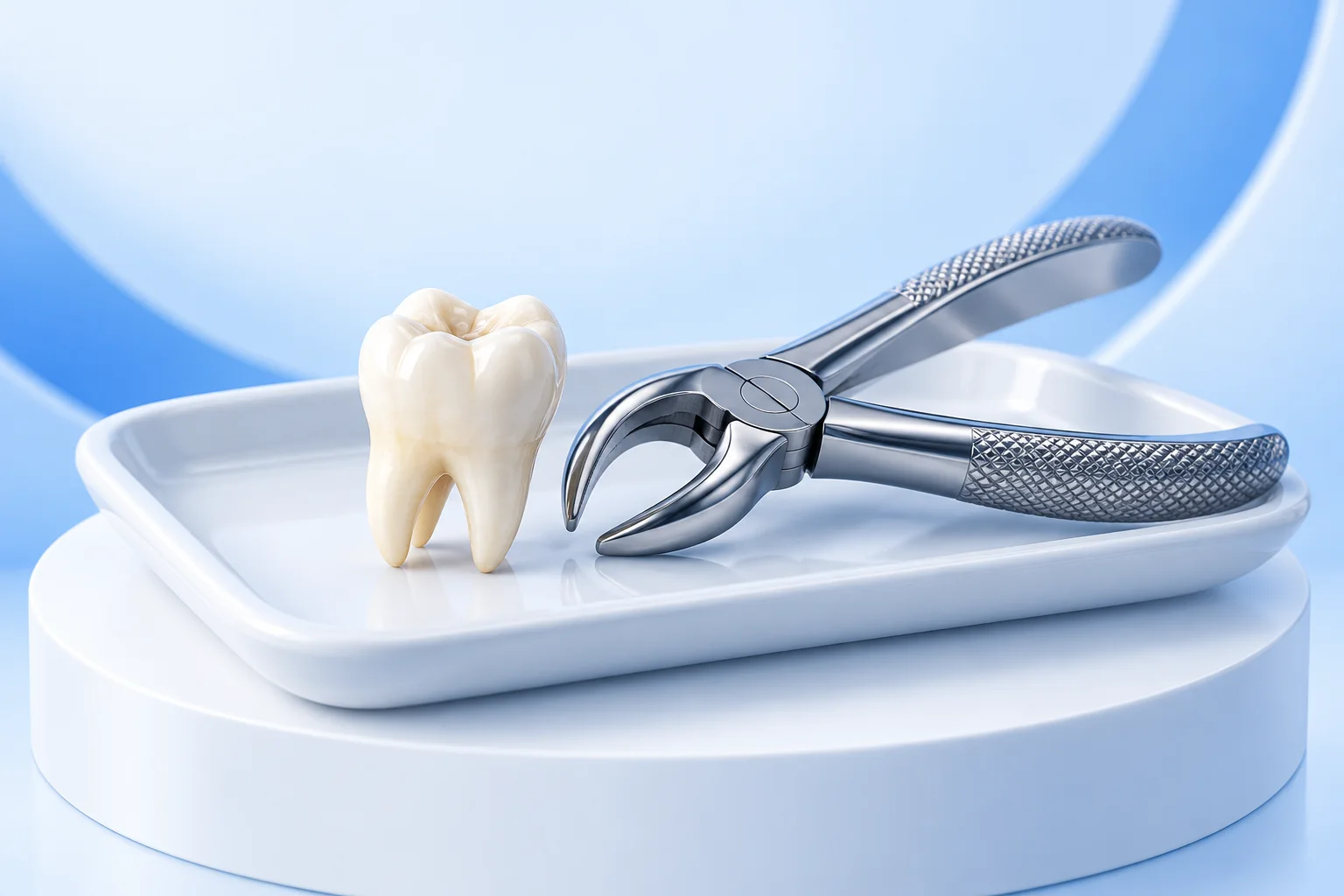
Preparing for an extraction
Bring a list of medicines, allergies and medical conditions. Tell the dentist about blood thinners and previous bleeding problems. Ask whether removal is straightforward or surgical and what arrangements you need for the appointment.
Treatment and recovery
Local anaesthetic is commonly used. A more difficult extraction may require additional planning or specialist care. A blood clot forms in the socket and supports healing. Soreness, swelling and a temporarily restricted diet can follow removal.
Aftercare matters
Follow the written instructions from your treating dentist. These include how to protect the wound, clean your mouth, eat and manage discomfort. Avoid smoking during recovery. Do not change prescribed medicines without advice.
When to contact the dentist
Seek prompt advice for bleeding that will not stop, worsening pain or swelling, fever or an unpleasant taste with other symptoms. Trouble breathing or swallowing needs urgent medical care.
Planning the next step
Ask whether the gap needs a replacement and when to review it. Bring questions about eating, time off work, follow-up and the full cost of care, including any later replacement.
Common questions
Is removing a wisdom tooth always necessary?
No. The dentist assesses whether it is causing problems and whether removal is appropriate.
Can I get personalised aftercare online?
For a recent extraction, contact the treating dentist so advice accounts for the procedure and your medical history.
How online consultation can help
Use our consultation form to describe your concern, share relevant photographs and upload an optional report. After payment verification, Dr. Hiren Tandel reviews your request and contacts you about next steps. In-person examination may be needed before diagnosis or treatment planning.
This page provides general education, not a diagnosis or personalised treatment plan. For difficulty breathing or swallowing, seek urgent medical care instead of waiting for an online reply.
Further reading
Published by Arpan Virtual Dental Care · Updated 19 September 2026. For advice about your own teeth, discuss your symptoms and treatment options with a dentist.