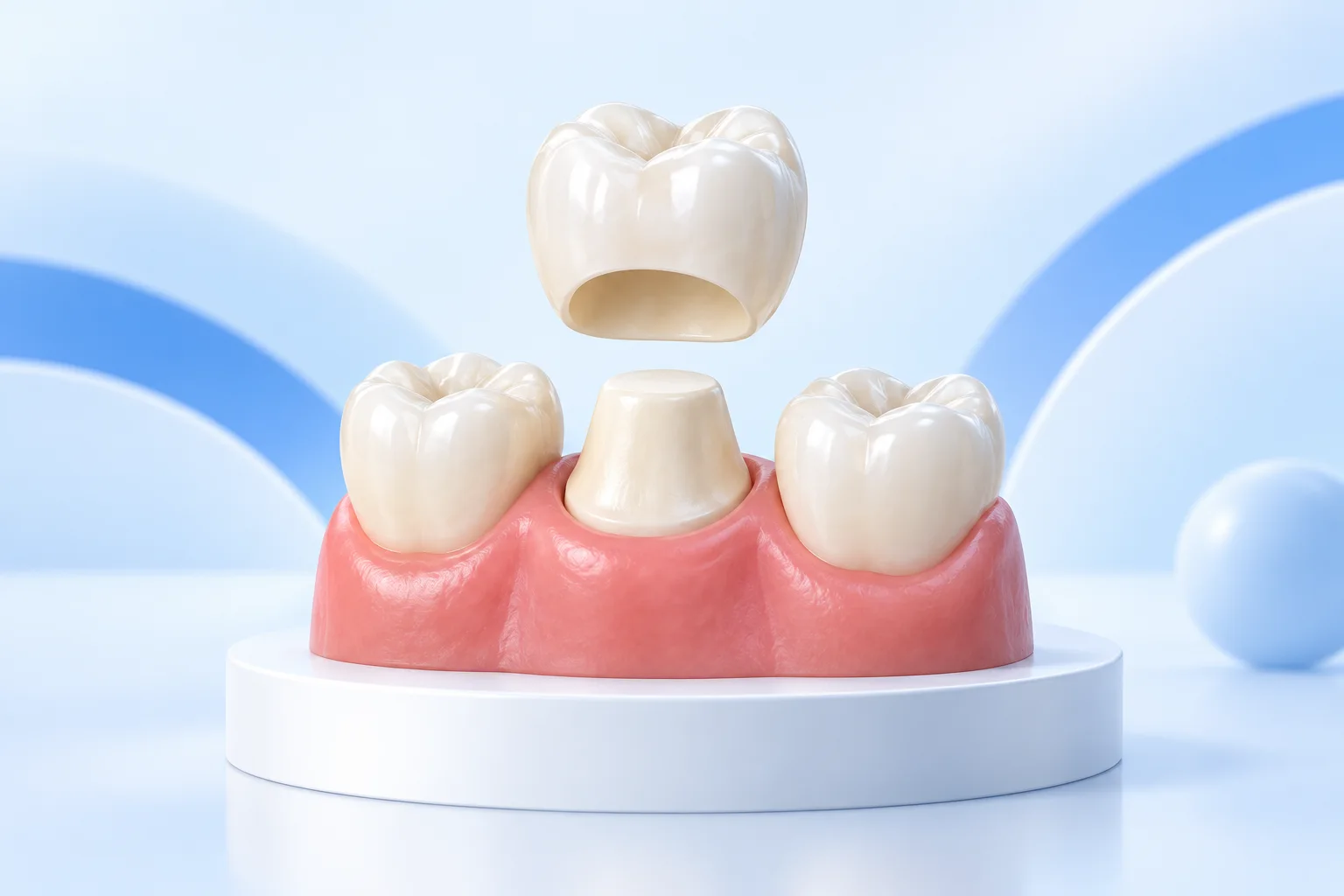
Why might a crown be recommended?
A large filling, a broken tooth or a weak remaining tooth may need more support than a smaller repair can provide. A crown may also be considered to restore shape or appearance. The dentist checks the tooth before recommending a restoration.
Choosing the right restoration
Ask why a crown is preferred to a filling or another option. Discuss material, appearance, how much tooth preparation is involved and whether other treatment is needed first. The choice should reflect your clinical needs as well as your preferences.
From planning to fitting
Your dentist explains the preparation and how the crown will be made and fitted. Ask whether a temporary crown is planned, how many visits are expected and how the fit and bite will be checked.
After your crown is fitted
Request cleaning instructions for the crown and gumline, and keep your review appointments. If the crown feels loose or your bite is uncomfortable, contact the treating dentist instead of attempting a repair yourself.
Common questions
Is a crown the same as an implant?
No. A crown is the visible restoration; an implant supports a replacement tooth when a natural tooth is missing.
What should a written estimate include?
Ask about the crown material, any preparatory care, temporary restoration, follow-up and the arrangements if adjustments are needed.
How online consultation can help
Use our consultation form to describe your concern, share relevant photographs and upload an optional report. After payment verification, Dr. Hiren Tandel reviews your request and contacts you about next steps. In-person examination may be needed before diagnosis or treatment planning.
This page provides general education, not a diagnosis or personalised treatment plan. For difficulty breathing or swallowing, seek urgent medical care instead of waiting for an online reply.
Further reading
Published by Arpan Virtual Dental Care · Updated 19 September 2026. For advice about your own teeth, discuss your symptoms and treatment options with a dentist.